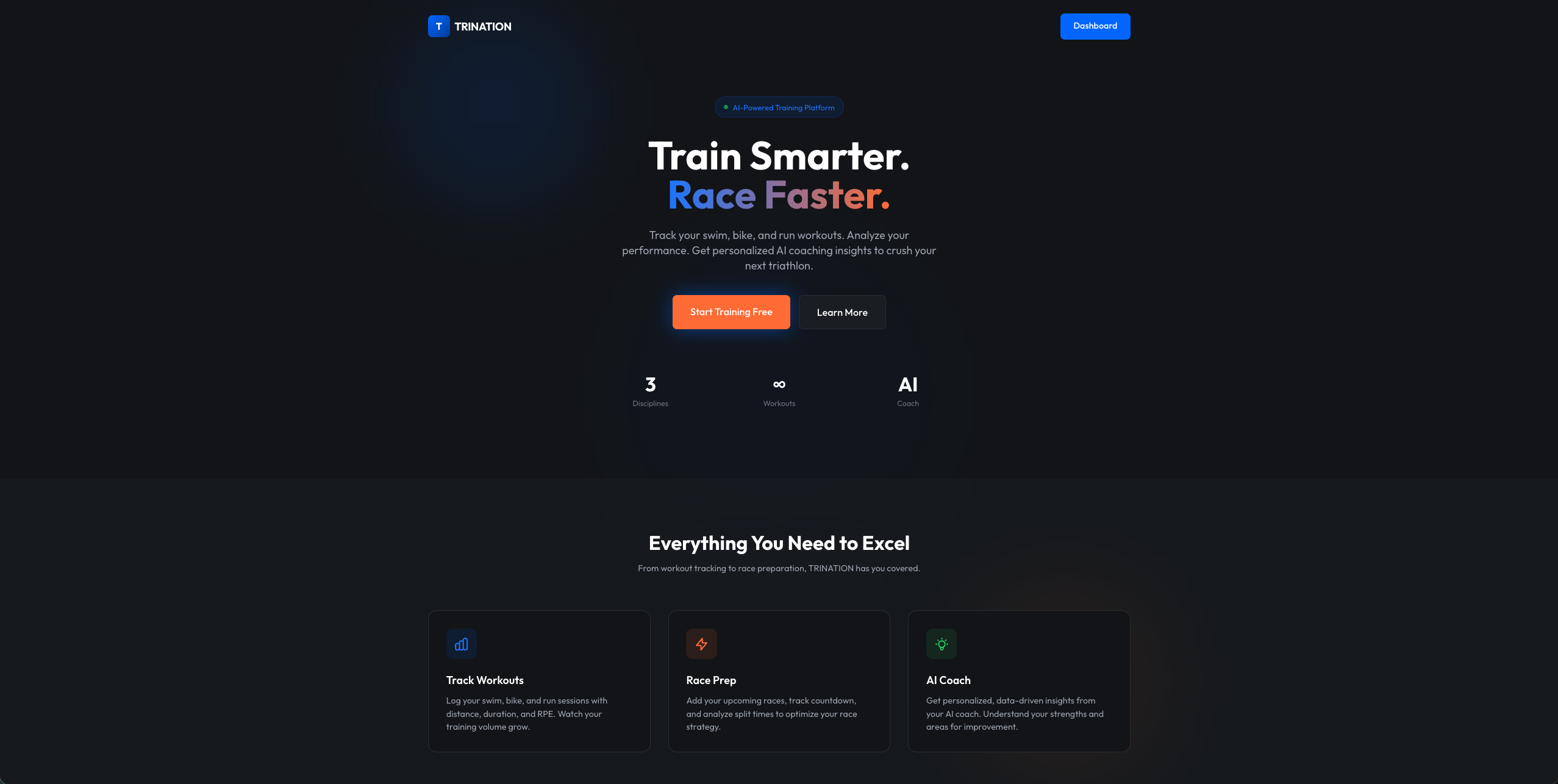
Train smarter across every discipline. One platform to log workouts, track progress, and get AI-powered coaching insights — built for triathletes who take their performance seriously.
Trination is built for the athlete who refuses to split their training life across five disconnected apps. Swim, bike, run — logged, analyzed, and coached in one place.
Triathlon is inherently complex: three disciplines, each with its own biomechanics, fatigue curves, and performance metrics. Most athletes compensate by juggling Strava for running, Garmin Connect for cycling, handwritten pool logs, and scattered spreadsheets — a fragmented setup that makes it nearly impossible to see the full picture.
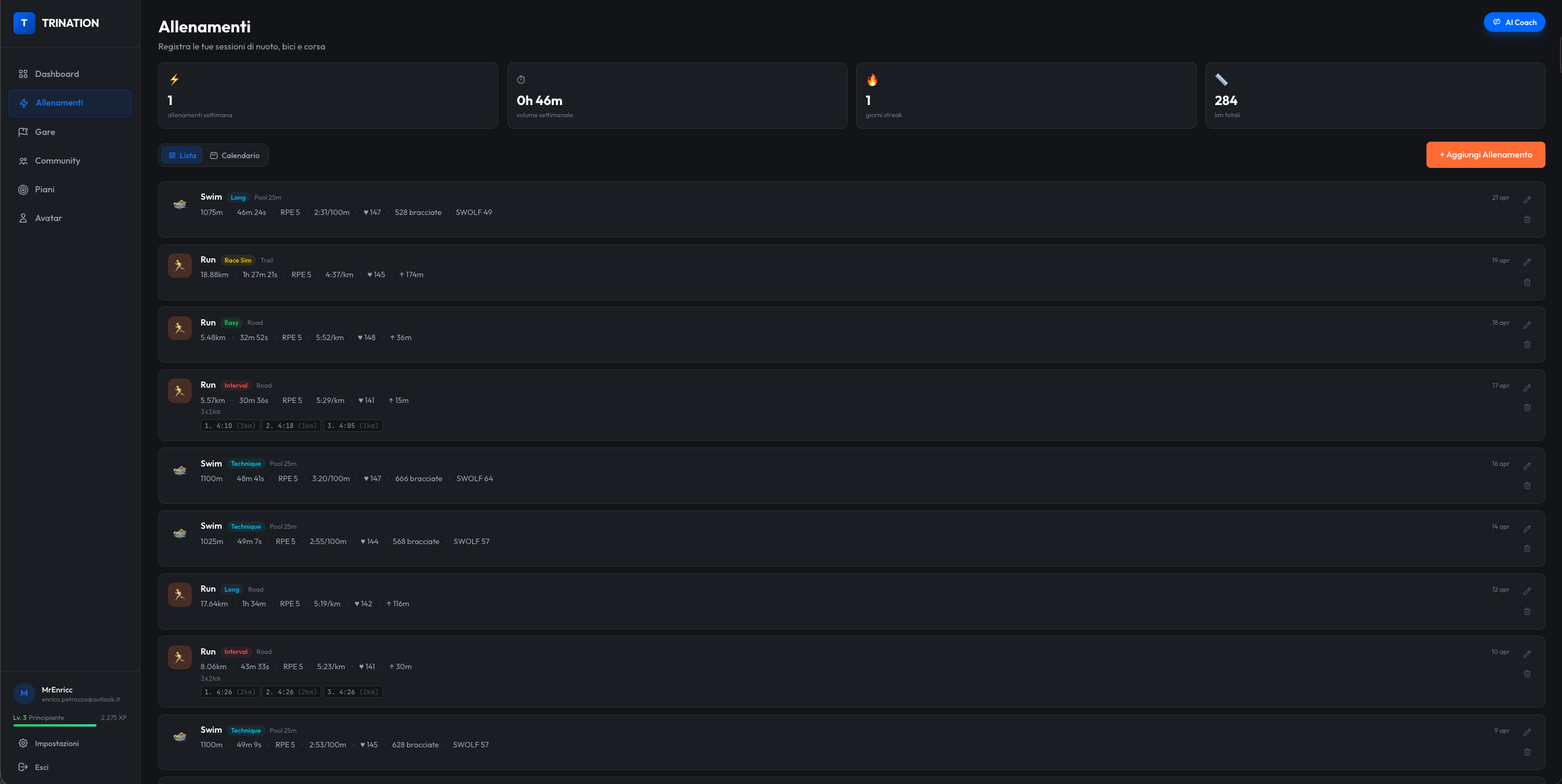
Trination consolidates all three into a single training hub: fast workout logging across any discipline, unified analytics that reveal cross-sport trends, and an AI coaching layer that surfaces actionable insights without replacing the nuance a real coach brings. The app is currently in Alpha and actively being shaped by early-adopter feedback.
Amateur triathletes face a unique paradox: enormous training complexity, minimal tooling designed for them specifically.
Athletes rely on Strava for runs, Garmin Connect for cycling, pool notebooks, and fitness watches that each speak their own language — with no common thread connecting the load across all three sports.
Without a unified view, it's impossible to understand how a hard swim session impacts your run pace the next day, or how cumulative weekly load distributes across disciplines. Training decisions happen in the dark.
Professional triathlon coaching is expensive and largely inaccessible to amateurs. Most athletes train on gut feel, forum advice, and generic plans that don't account for their individual physiology or schedule.
Trination brings all three disciplines under one roof — a fast logging experience, cross-sport analytics, and an AI coach that knows your training history.
By treating the three disciplines as one interconnected system — not three separate problems — Trination can surface insights that no single-sport app ever could.
Building Trination from scratch: research into triathlon culture, a design system for three disciplines, and a full-stack build powered by modern AI tooling.
I started by immersing myself in the triathlon training community — reading forums, studying how athletes track workouts, and auditing the major tools they use: Strava, Garmin Connect, TrainingPeaks, and Zwift. Each had strengths, but none offered a unified, discipline-agnostic experience.
Conversations with amateur triathletes at all levels revealed a consistent pain: the mental overhead of managing multiple platforms was as draining as the training itself. Athletes wanted one clean place to log, review, and understand their multi-sport load — without sacrificing depth for any single discipline.
The core design challenge was building a single interface that felt native to three very different athletic disciplines without becoming generic. I structured the app around a central concept: all workouts are first-class citizens, but the system understands their context — swim pace in per-100m, bike power in watts, run cadence in spm.
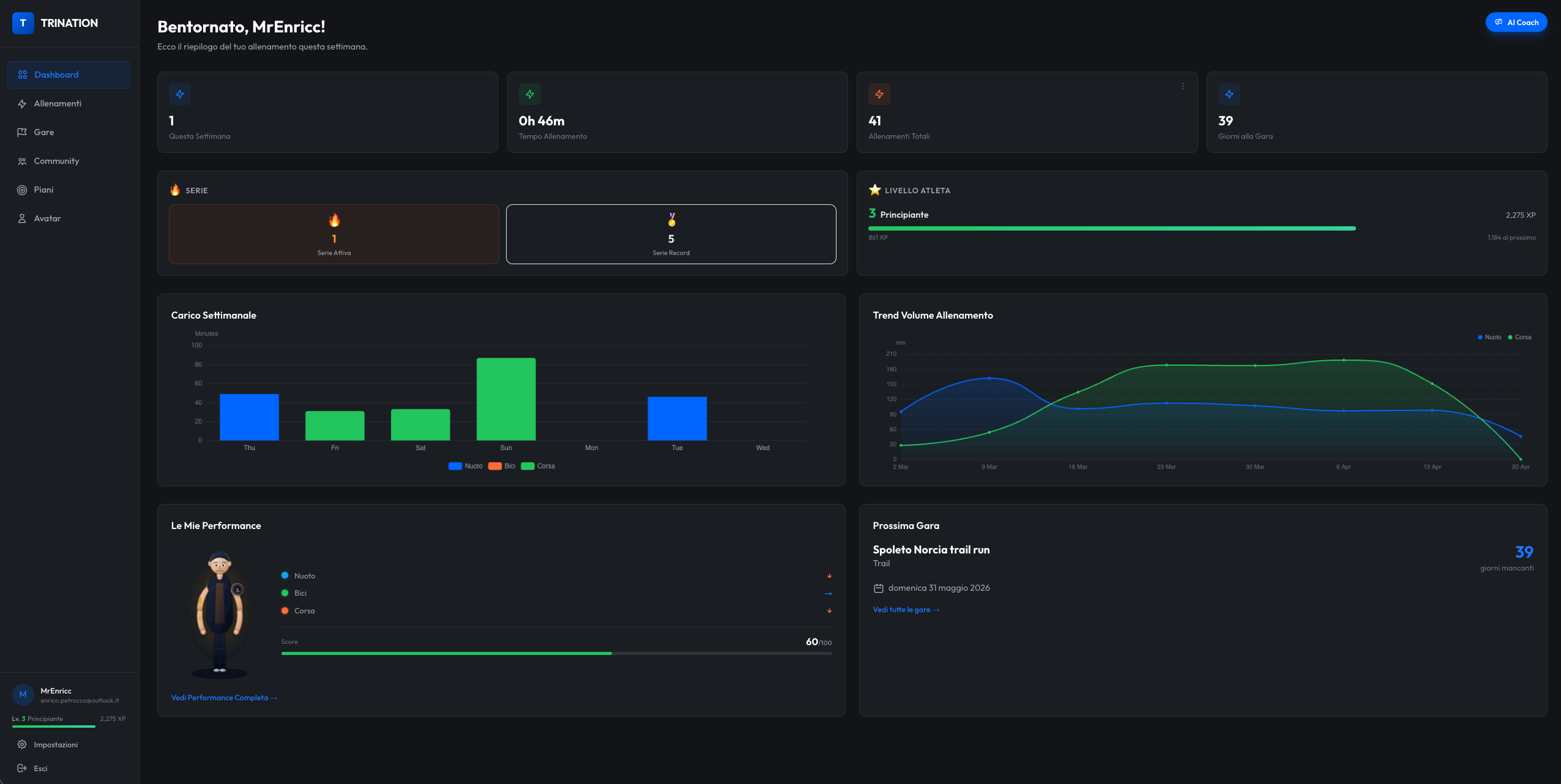
Wireframes iterated quickly through three main flows: workout logging (fast, minimal friction), performance dashboard (at-a-glance multi-sport summary), and AI coaching chat (contextual, conversational). Dark mode was chosen as the primary theme — athletes often log sessions in low light, and the interface needed to be readable without eye strain.
Trination is built on Next.js 15 with TypeScript for type-safe server-side rendering and API routes. Authentication is handled via Supabase with row-level security ensuring each athlete's data is completely isolated. The multi-language architecture uses a custom LanguageProvider that supports Italian and English from day one.
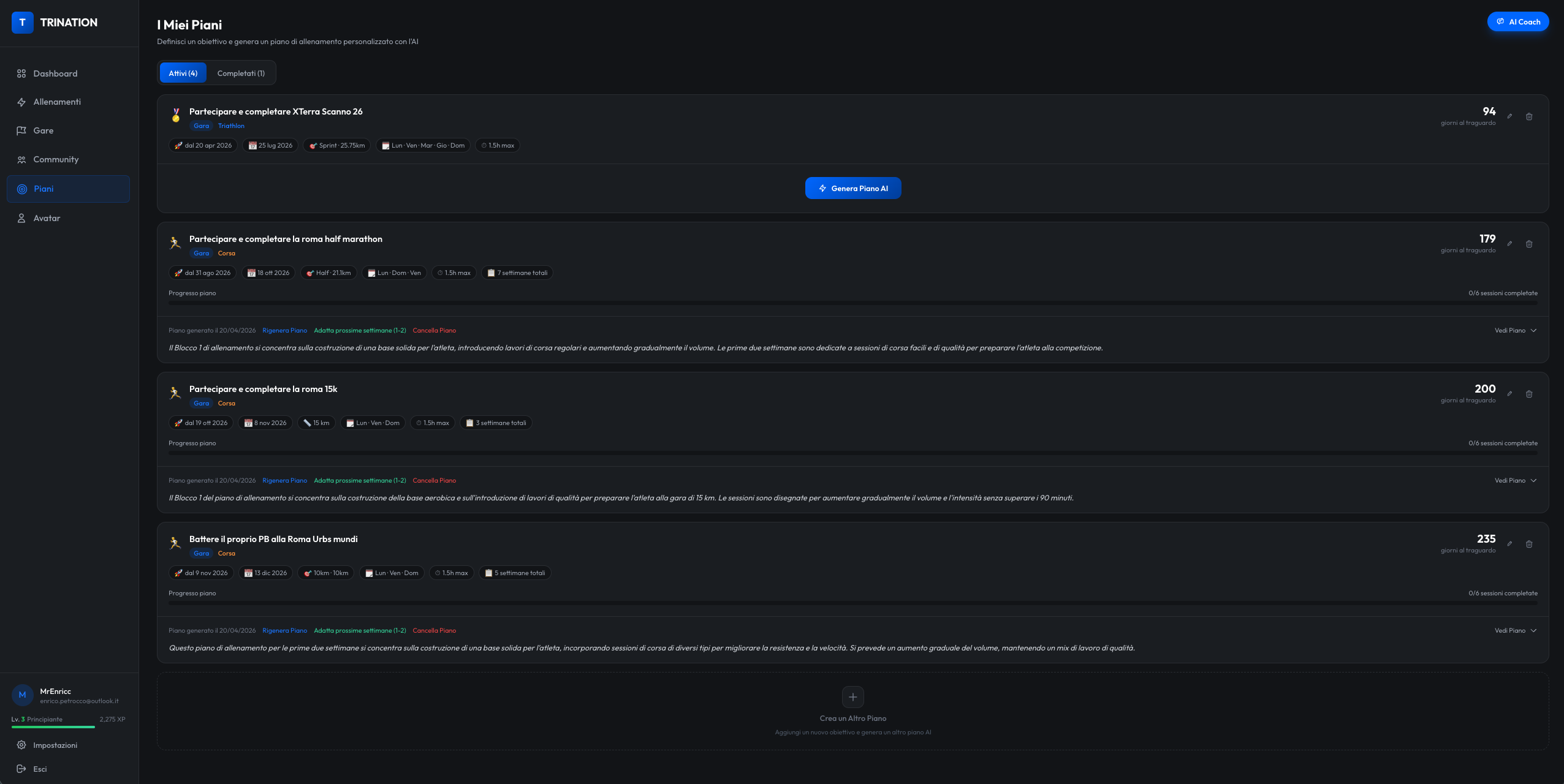
The AI coaching layer is powered by an AIChatProvider that maintains session context and training history, allowing the coach to give advice grounded in actual logged data rather than generic recommendations. Real-time updates, optimistic UI patterns, and a mobile-first layout ensure the experience is smooth whether you're logging from the pool deck or reviewing analytics at your desk.
The Alpha was deployed on Netlify and opened to a small group of early adopters. Feedback focused on two areas: the workout logger needed faster discipline switching, and the AI coach responses needed better awareness of weekly training volume — both now prioritized in the active development backlog.
Current roadmap priorities include GPS route integration, wearable sync (Apple Watch, Garmin), race-day planning tools, and enhanced analytics with Training Stress Score (TSS) models. The Alpha is live and accepting new testers as the product evolves toward a public Beta.
Trination is actively used by its first group of testers. Early signals validate the core thesis: athletes genuinely want a unified training home.
Early testers reported that consolidating their swim, bike, and run logs into a single interface immediately reduced the cognitive friction of managing their training. The ability to see a week's full multi-sport load at a glance was cited as the feature they didn't know they needed.
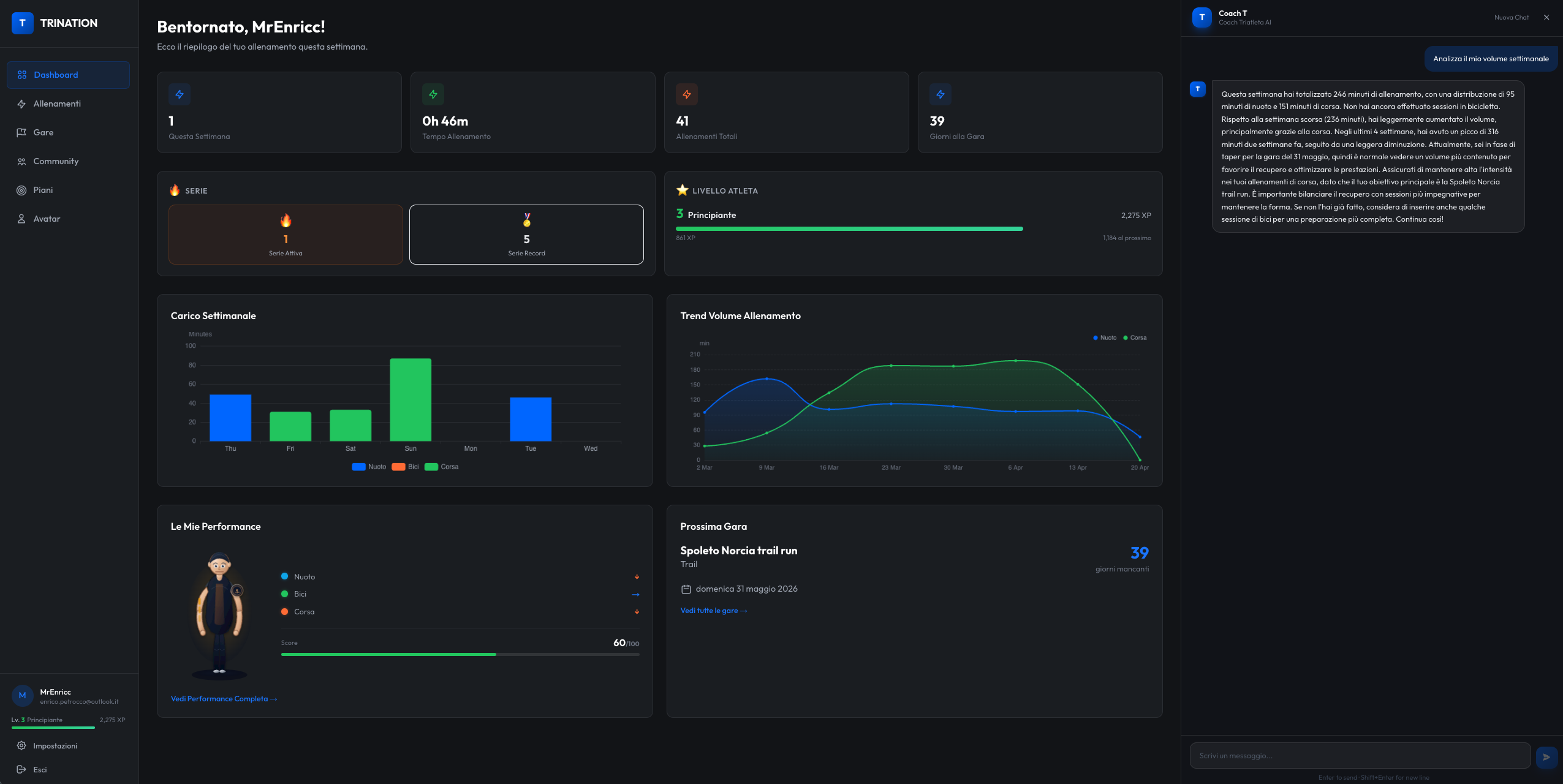
The AI coaching chat was the most used feature in Alpha. Athletes used it to ask about recovery, pacing strategy, and discipline balance. The conversational format — grounded in their actual logged data — made responses feel personalized rather than generic, which drove repeat sessions.
Building Italian and English support from day one — not as an afterthought — means the app feels native to both markets. The language system was architected at the provider level, making future locale additions straightforward without requiring UI changes.
The Beta roadmap focuses on depth and connectivity: GPS route integration, wearable device sync, race-day planning with taper logic, Training Stress Score analytics, and an expanded AI model with sport-specific periodization knowledge. The goal is to become the training OS for the everyday triathlete.
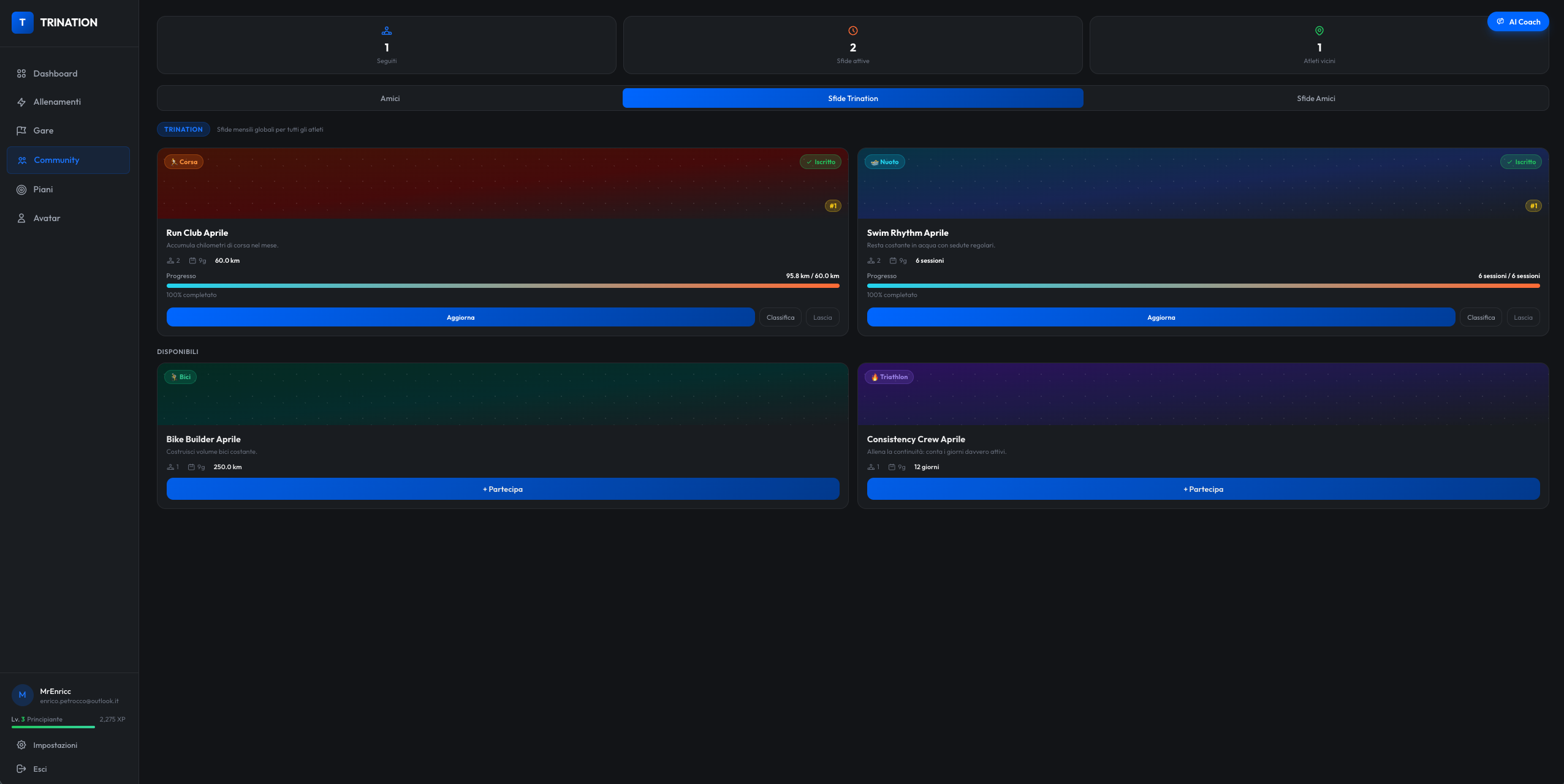
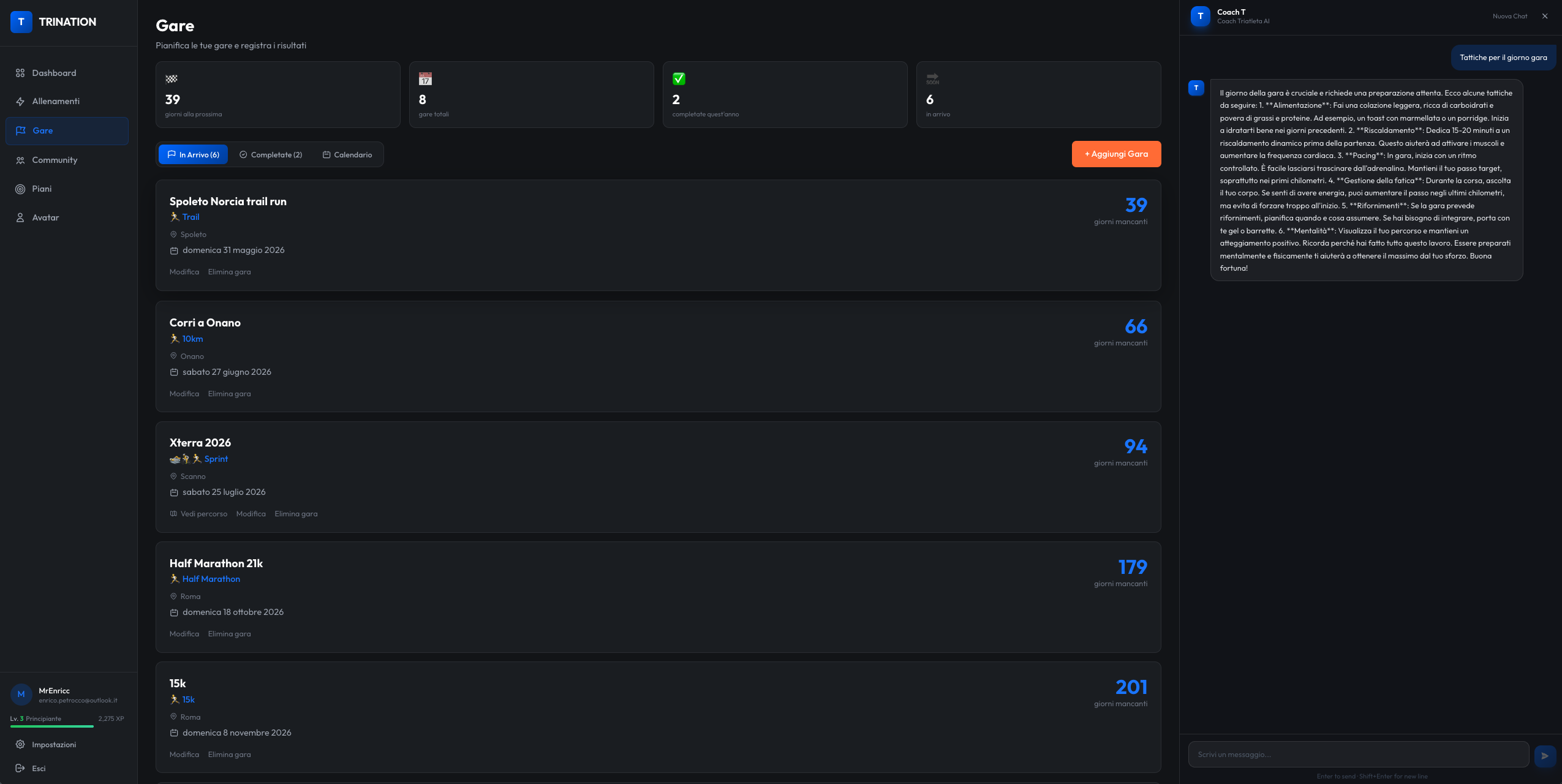
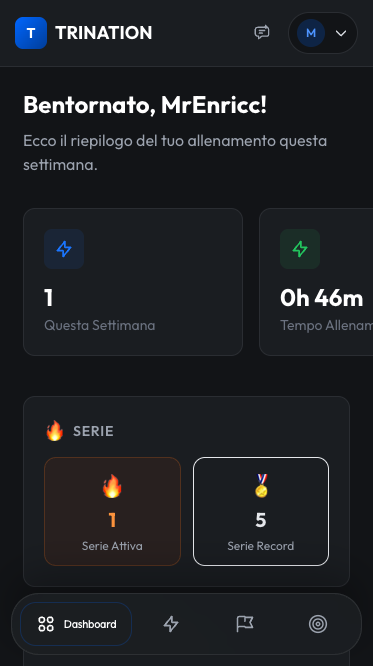
A look at the key screens and interactions that make up Trination's Alpha experience.
The Alpha is live. Try the platform, log your first workout, and let the AI coach know how your training is going. Feedback shapes every sprint.