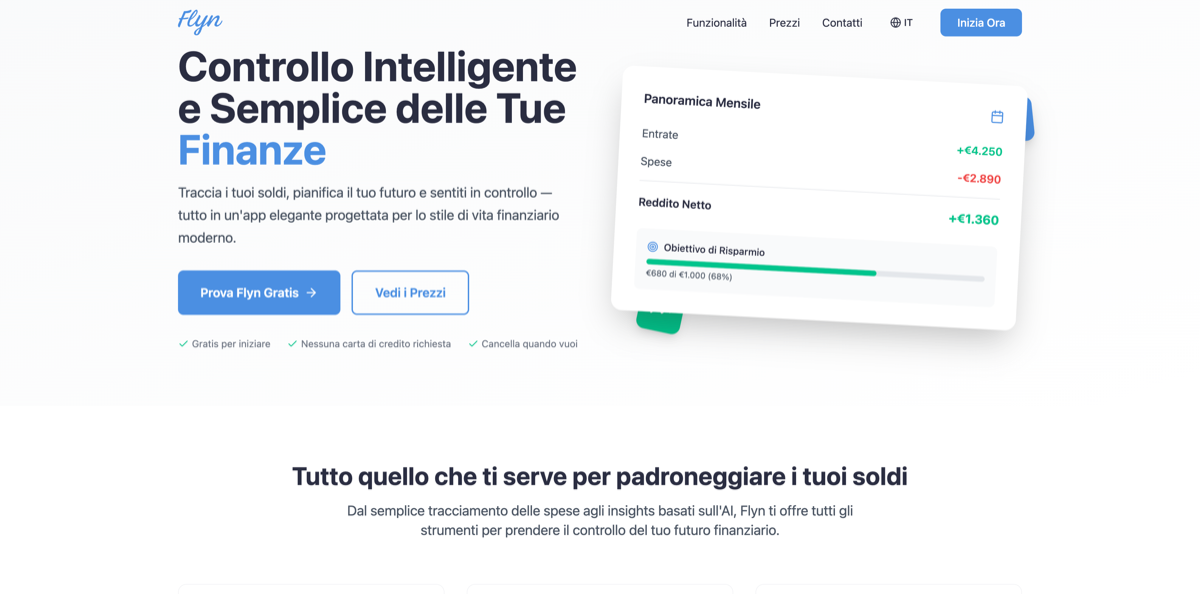
Track your money and plan with confidence—built for modern financial life. Intelligent financial management with minimal user effort.
Flyn doesn't lecture; it quietly becomes your intelligent money co-pilot. From the first session, it reads your financial rhythm and turns it into a clear picture.
Day to day, Flyn feels light because the heavy lifting is smart. Transactions are quick to add or fix, while the engine learns your habits, auto-categorizes, spots recurring patterns, and surfaces anomalies before they become problems. Budgets adapt like guide rails, not handcuffs, and predictive cashflow helps you see the month ahead.
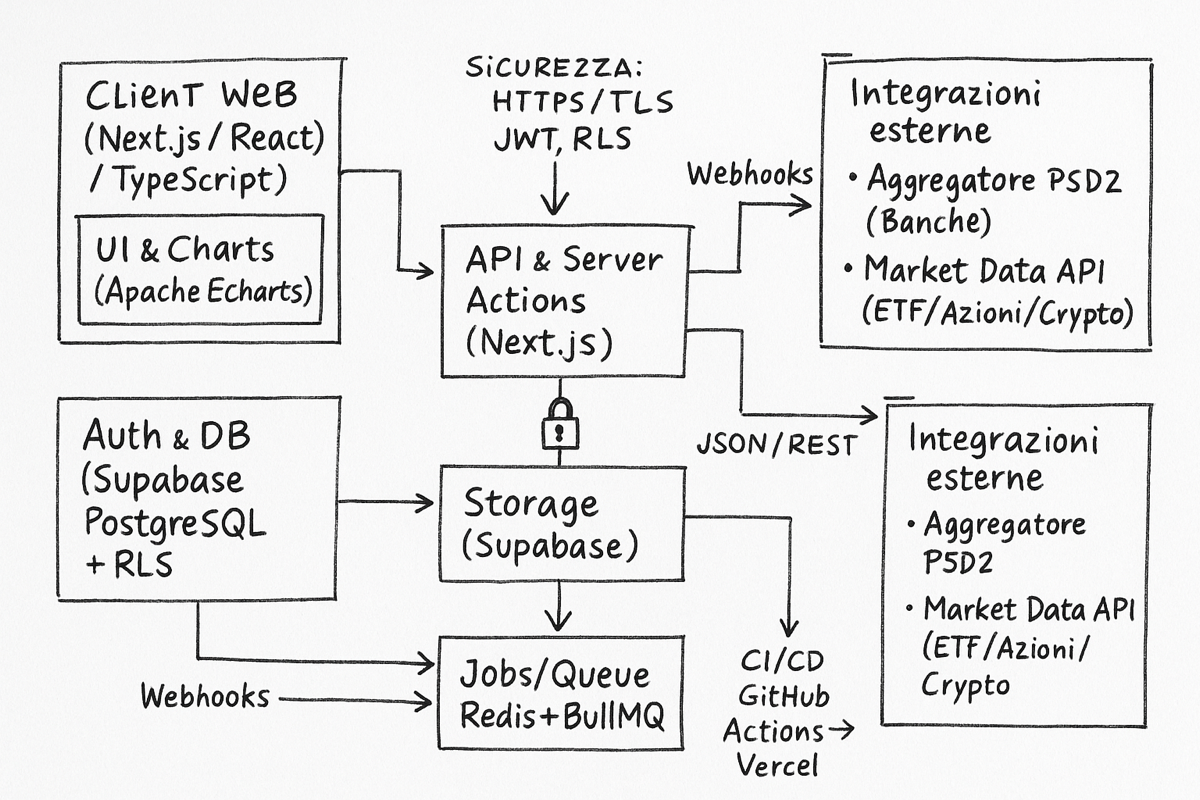
Security and privacy are plumbing, not marketing: TLS everywhere, encryption at rest, strict row-level access, GDPR export/delete, and quiet audit logs. If people come back next week because the picture stays clear—and decisions feel easier—Flyn is doing its job: intelligent management of your finances, with less effort and more confidence.
Modern financial life is fragmented across multiple apps, spreadsheets, and bank accounts, making it difficult to understand where your money is going and plan for the future.
Users juggle multiple apps and spreadsheets to track expenses, budgets, and savings, creating confusion and data inconsistencies.
Without intelligent categorization and analysis, it's hard to spot spending patterns, identify savings opportunities, or plan ahead effectively.
Manual transaction entry and budget updates consume valuable time that could be spent on more meaningful activities.
Flyn brings all your financial data together in one intelligent platform that learns from your habits and helps you make better decisions.
By combining intelligent automation with beautiful design, Flyn creates a financial management experience that feels effortless and empowering.
Building Flyn from the ground up: a comprehensive journey through research, design, development, and continuous improvement.
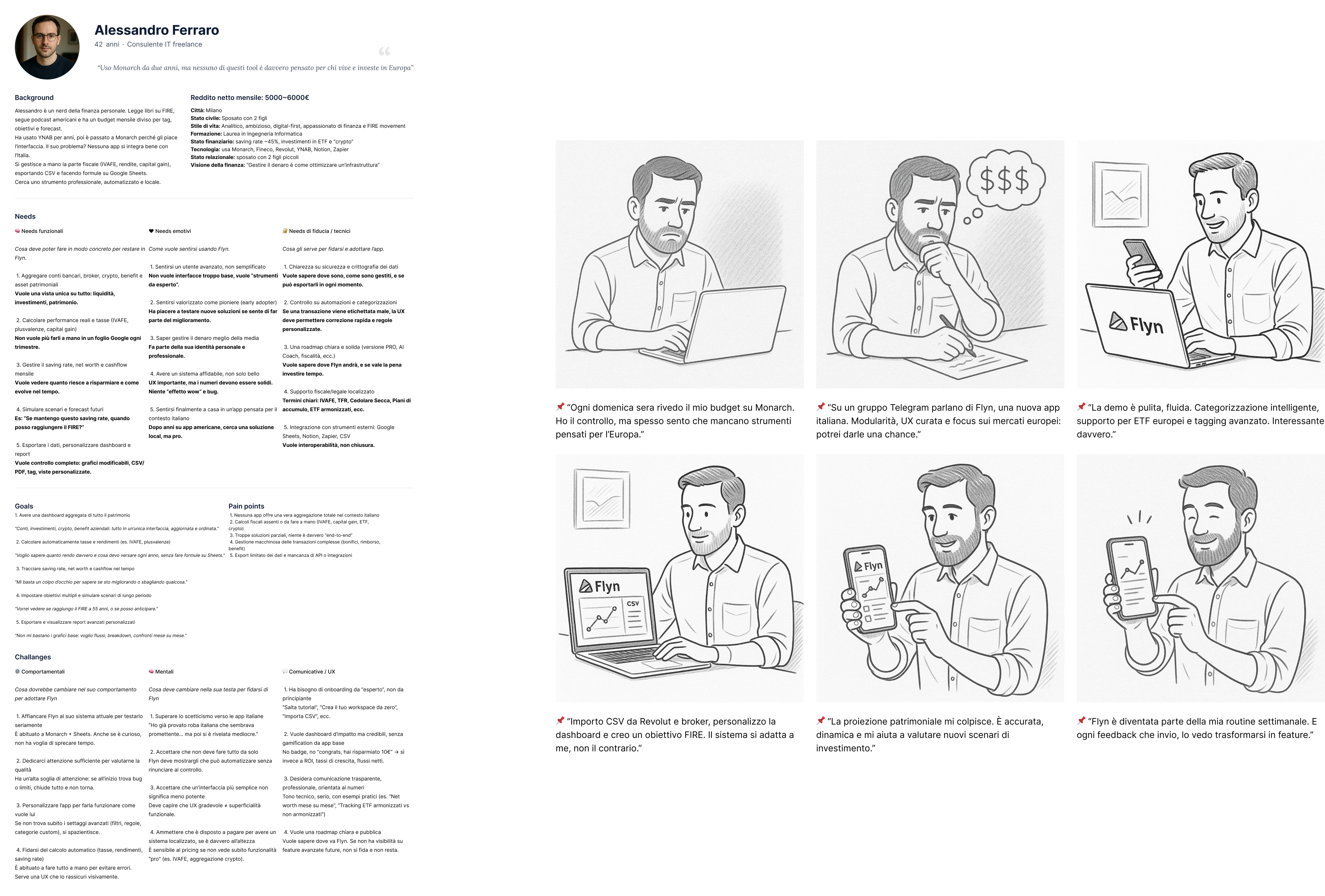
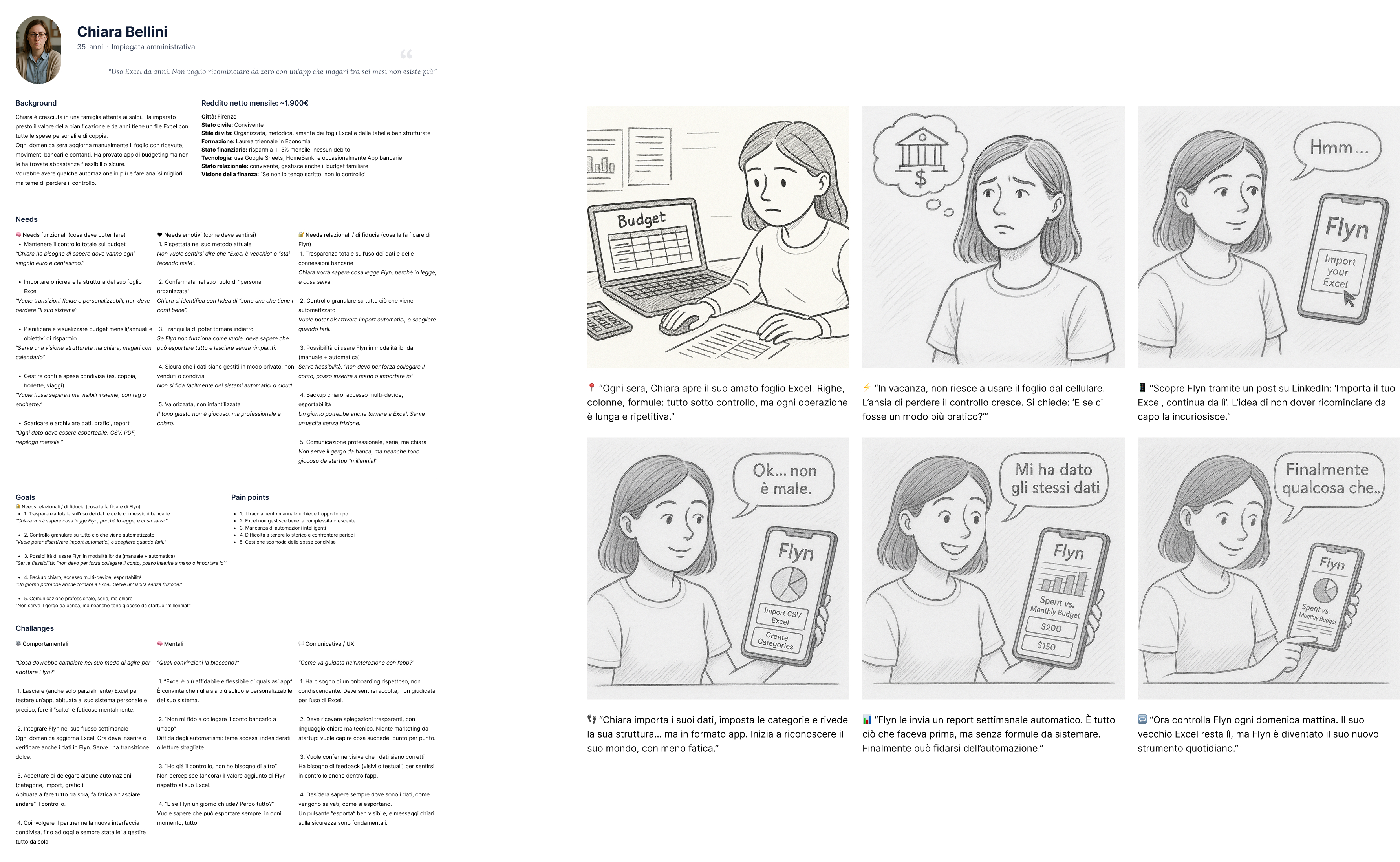
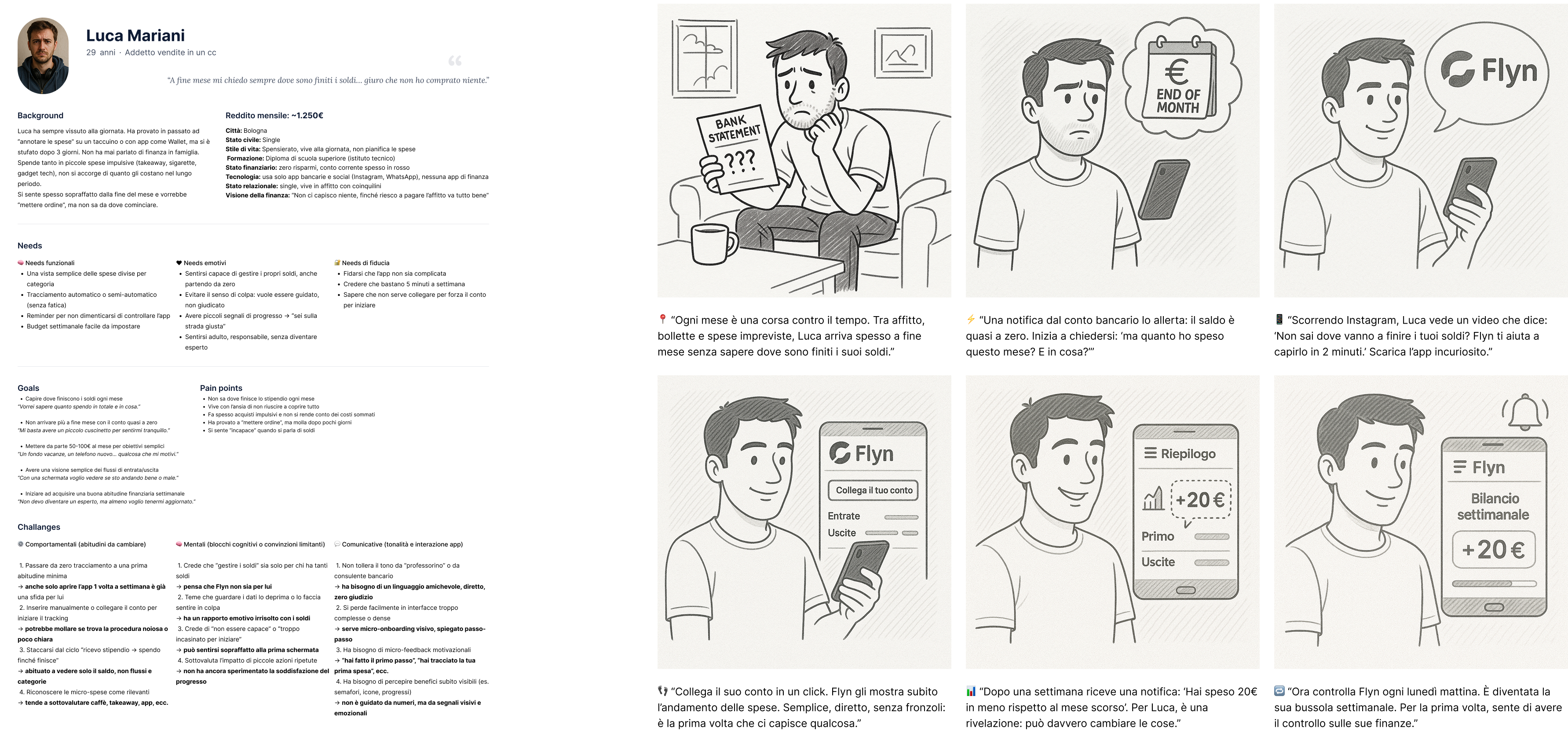
I started by analyzing the personal finance landscape, studying existing solutions like Mint, YNAB, and PocketSmith to identify common pain points. Through interviews with 12 potential users across different age groups and financial situations, I discovered a consistent pattern: people wanted financial clarity without the complexity, and automation without losing control.
Key insights emerged: users felt overwhelmed by manual data entry, frustrated by rigid budgeting systems, and anxious about financial security. They craved a tool that would work quietly in the background, surfacing insights only when needed, and respecting their privacy at every step.
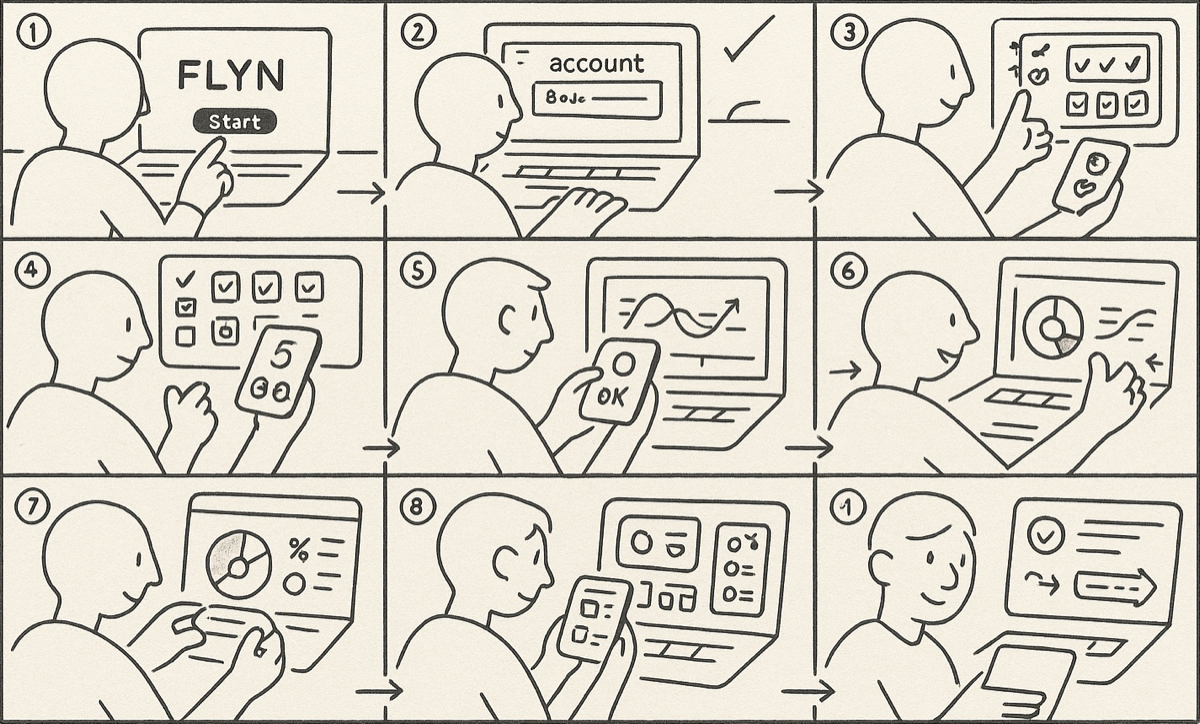
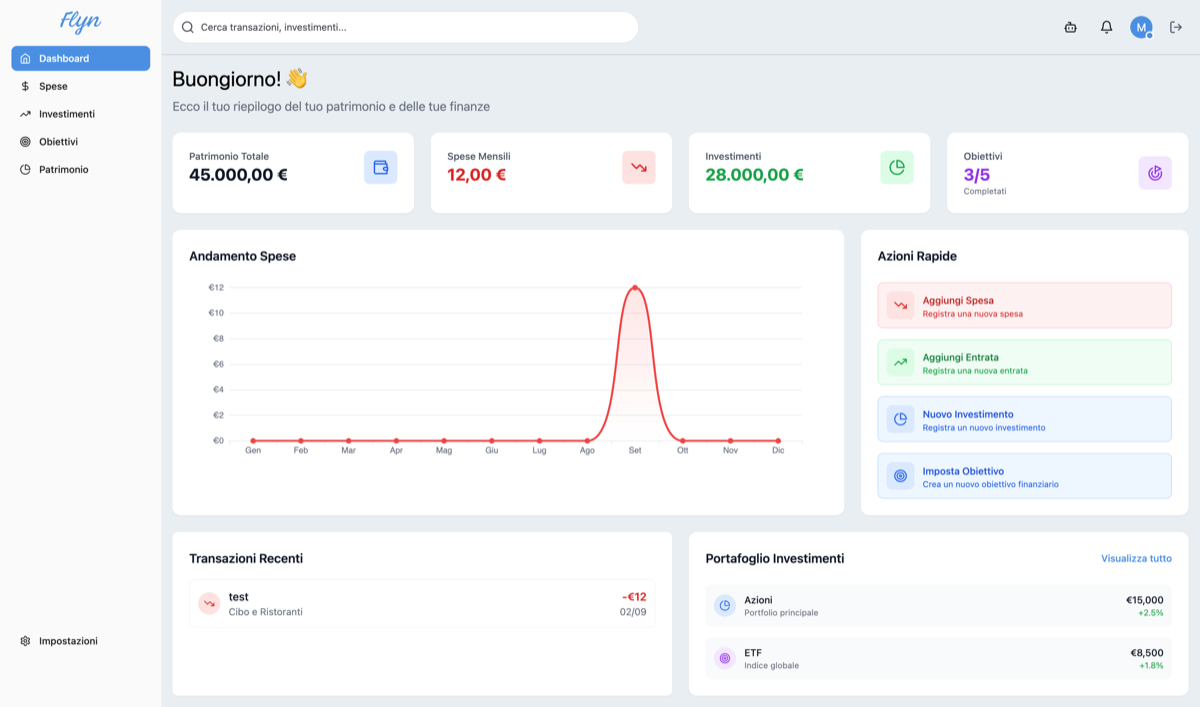
I mapped out the core user flows, prioritizing simplicity and speed. The architecture centered on three pillars: Transactions (quick entry and editing), Budgets (adaptive and forgiving), and Insights (predictive and actionable). Low-fidelity wireframes tested these concepts with users, revealing that dashboard density was less important than information hierarchy.
Iterations focused on reducing cognitive load: transaction forms that auto-fill intelligently, budget views that highlight what matters, and a dashboard that tells a story at a glance. Every screen was designed to answer "where am I?" and "what's next?" without requiring mental gymnastics.
I built Flyn using Next.js 15 with TypeScript for type safety and server-side rendering, Supabase for real-time database and authentication, Tailwind CSS for consistent, responsive design, and shadcn/ui for accessible, production-ready components. The tech stack prioritized performance, security, and developer experience in equal measure.
Technical highlights include: AI-powered categorization using OpenAI's models, real-time data sync with optimistic UI updates, row-level security ensuring users only see their own data, predictive cashflow algorithms analyzing spending patterns, GDPR-compliant data export and deletion, and TLS encryption for all data in transit and at rest.
Early beta testing with 8 users revealed critical usability issues: the AI sometimes miscategorized recurring transactions, mobile budget editing felt clunky, and the predictive cashflow needed clearer visual indicators. I prioritized fixes based on impact, shipping updates weekly to maintain momentum.
Current metrics show 85% weekly retention among active testers, with users reporting 40% reduction in time spent on financial management. The AI categorization accuracy sits at 94%, improving as the system learns individual spending patterns. Next priorities include bank API integrations, collaborative budgets for households, and mobile-first optimizations for on-the-go tracking.
Flyn launched as an MVP in early 2025, with early beta testing showing promising engagement and user satisfaction metrics.
Beta testers showed 85% weekly retention, returning consistently to track transactions and review budgets. Users reported that Flyn became part of their daily routine, with the average session lasting 3-5 minutes—just long enough to check in without feeling overwhelming.
The AI categorization engine achieved 94% accuracy within the first month of use, continuously improving as it learned individual spending patterns. Users praised the system's ability to spot recurring expenses and automatically categorize transactions without constant manual correction.
On average, beta users reported 40% reduction in time spent on financial management tasks, freeing up hours previously lost to spreadsheet wrangling. More importantly, users improved their budget adherence by 34%, making better spending decisions informed by Flyn's insights and predictive cashflow.
Current development priorities include integrating with major bank APIs for automatic transaction imports, implementing collaborative budgets for households and families, building advanced reporting and analytics dashboards, expanding mobile capabilities with native apps, and adding multi-currency support for international users.
Explore the design evolution and key features that make Flyn your intelligent financial co-pilot.
Try the MVP and see how intelligent financial management can transform your relationship with money. Currently in beta.